How Maryland Pays Homage to Classic Calligraphy in Unexpected Ways
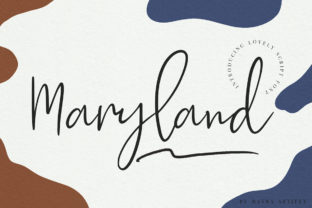
For designers, marketers, and creative professionals seeking distinction without compromise, the Maryland font has emerged not as just another typeface—but as a quiet revolution in typographic intention. Rooted in the disciplined elegance of historical calligraphy yet engineered for modern digital workflows, Maryland bridges centuries of craftsmanship with today’s demand for authenticity, legibility, and expressive clarity. It doesn’t mimic tradition; it reinterprets it—thoughtfully, precisely, and with unmistakable presence.
A Typeface Born from Discipline—and Designed for Dialogue
At its core, Maryland is a serif typeface inspired by 18th- and 19th-century English copperplate and Spencerian scripts—but distilled into something rigorously functional. Its letterforms retain the subtle contrast, graceful terminals, and rhythmic stroke modulation of master calligraphers, yet they’ve been meticulously optimized for screen readability, responsive layout behavior, and multilingual support. Unlike decorative script fonts that sacrifice utility for flair, Maryland delivers both: the warmth of human touch and the reliability of engineered typography.
This duality reflects a broader shift across creative industries. As audiences grow increasingly sensitive to visual tone—especially in brand storytelling, editorial design, and digital product interfaces—the demand for typefaces that communicate character without sacrificing clarity has surged. Maryland answers that need—not by chasing trends, but by anchoring itself in enduring principles of form and function.
Why Designers Are Choosing Maryland—Now More Than Ever
Several converging forces explain why professionals across disciplines are integrating Maryland into their toolkits:
- Authenticity as a strategic differentiator: In an era saturated with algorithmically generated visuals and AI-assisted content, hand-informed design choices carry renewed weight. Maryland’s calligraphic DNA signals intentionality—telling users, “This was made with care,” before a single word is read.
- Responsive typography maturity: With variable font technology now widely supported (in all major browsers and design tools), Maryland’s optical sizing variants and axis-controlled weight progression allow designers to fine-tune hierarchy across devices—without swapping families or compromising rhythm.
- Brand voice alignment: From boutique law firms emphasizing gravitas to sustainable lifestyle brands conveying craft and continuity, Maryland supports nuanced positioning. Its lighter weights evoke refinement; its bolder cuts project quiet confidence—not aggression.
- Workflow efficiency meets aesthetic integrity: Unlike legacy script fonts requiring manual kerning adjustments or OpenType feature toggling, Maryland ships with intelligent default spacing, contextual alternates enabled out-of-the-box, and robust language coverage—including extended Latin, Greek, and Cyrillic character sets.
Real-World Integration: Beyond the Mockup
Consider how a freelance brand strategist recently deployed Maryland for a regional heritage food cooperative in the Chesapeake Bay area. The client needed a visual identity that honored generational farming practices while appealing to younger, values-driven consumers. Using Maryland’s Display cut for logotype and signage—and switching seamlessly to its Text variant for packaging copy and website body—the designer achieved cohesion without cliché. No faux-vintage textures. No forced rusticity. Just clear, confident typography rooted in real tradition.
Or take a SaaS startup building tools for independent educators. Their interface required a typeface that felt approachable yet authoritative—neither sterile nor overly casual. Maryland’s moderate x-height, open apertures, and balanced stroke contrast delivered exceptional scannability in dashboards and onboarding flows. Crucially, its italic retains true cursive flow (not merely slanted roman), lending emphasis that feels organic—not mechanical—when highlighting learning objectives or feedback messages.
Aligning with Larger Cultural and Technological Shifts
Maryland’s resonance extends beyond aesthetics—it mirrors deeper evolutions in how we create, consume, and value design.
From scalability to substance: Early web typography prioritized technical compatibility over expressive range. Today’s standards—like WOFF2 compression, variable font axes, and CSS @font-face descriptors—enable richer typographic expression without performance penalties. Maryland leverages these advances intelligently: its variable weight axis spans from Hairline to Black, and its width axis allows subtle condensation for tight UI containers—all within a single, lightweight file.
The rise of context-aware design: Users no longer encounter content in isolation. A newsletter may be read on a desktop, skimmed on mobile, then quoted in a social image. Maryland’s consistent metrics across weights and optical sizes ensure message integrity regardless of context—supporting what designers now call “cross-medium fidelity.”
A counterpoint to algorithmic homogenization: As generative AI accelerates production cycles, there’s growing professional pushback against stylistic sameness. Maryland offers a deliberate alternative: a font built on human judgment, historical study, and iterative testing—not statistical averages. Its letter ‘g’, for example, features a closed loop with a tapered ear—a detail that echoes 19th-century engraving conventions but improves recognition at small sizes. These aren’t arbitrary flourishes—they’re decisions grounded in observation and use.
Practical Adoption: Where Maryland Fits in Your Toolkit
Maryland isn’t intended to replace workhorse sans-serifs like Inter or Roboto. Instead, it excels where typographic voice matters most:
- Brand systems: Use Maryland for primary headlines, logo lockups, and campaign typography—paired with a neutral, highly legible sans-serif for body copy. Its contrast invites hierarchy without shouting.
- Editorial design: In long-form digital publications or premium print magazines, Maryland’s text cut enhances reader engagement through subtle rhythm and improved word shape recognition—reducing cognitive load over extended reading.
- Product interfaces: Apply its medium weight for section headings and status labels in admin dashboards or creator tools. Its generous counters and unambiguous letterforms reduce misinterpretation—critical in data-heavy contexts.
- Marketing assets: From email subject lines to Instagram carousel text overlays, Maryland’s display variants scale elegantly while retaining personality—even at sub-20px sizes on high-DPI screens.
Importantly, Maryland integrates natively with leading platforms: Figma’s variable font support enables real-time axis adjustment; Adobe Fonts includes full licensing for web and desktop use; and its CSS-ready naming convention (font-weight: 250;, font-stretch: 95%;) simplifies implementation for front-end teams.
Looking Ahead—Without Losing Ground
Typography’s future isn’t about abandoning history—it’s about carrying forward what works, discarding what doesn’t, and adapting with precision. Maryland embodies that ethos. It doesn’t romanticize calligraphy; it studies it. It doesn’t ignore digital constraints; it engineers for them. And it doesn’t assume one-size-fits-all solutions—it provides calibrated options for specific communicative needs.
For professionals who understand that type is never neutral—that every curve, contrast ratio, and spacing decision shapes perception and trust—Maryland offers more than visual appeal. It offers alignment: between craft and code, between legacy and innovation, between intention and impact.
Whether you're refining a startup’s visual language, crafting a nonprofit’s annual report, or designing an e-commerce experience that balances warmth and efficiency, Maryland pays homage to classic calligraphy in unexpected ways—not as nostalgia, but as necessity. It brings out the best in every design project because it begins with respect—for history, for the audience, and for the enduring power of well-made letters.
Explore how Maryland can elevate your next project—view specimens, test variable axes, and access licensing details.