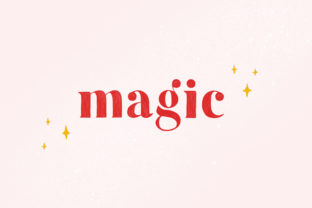
Magic: A Color Font That Brings Joy and Personality to Your Designs
If you've ever spent too long searching for a typeface that feels both playful and polished—something that adds instant charm without sacrificing professionalism—you’re not alone. Many designers, crafters, and small business owners struggle to find fonts that stand out in digital and print projects while remaining easy to use across common tools. That’s where Magic steps in—not just as another decorative font, but as a vibrant, expressive color font built for real-world creativity.
Magic is an OpenType-SVG color font, meaning it renders rich, layered colors and textures directly within supported applications. Unlike standard black-and-white fonts, Magic arrives with built-in gradients, shadows, and illustrative details—each letter designed like a miniature piece of art. Its whimsical curves, soft edges, and hand-crafted rhythm give it warmth and personality rarely found in digital type. It’s not just readable; it’s delightful to look at—and even more satisfying to use.
Why Designers Turn to Magic for Real Projects
Many adults creating marketing materials, social media graphics, invitations, or product packaging face a quiet but persistent challenge: how to communicate joy, approachability, or uniqueness without relying on stock illustrations or overused design trends. A generic sans-serif can feel sterile. A handwritten script may lack versatility. And many “fun” fonts either don’t scale well or break in key software.
Magic bridges that gap. Because it’s a color font built with OpenType-SVG technology, it retains its visual richness at any size—whether you’re designing a tiny Instagram story sticker or a large-format event banner. Its compatibility with Adobe Photoshop, Illustrator, Silhouette Studio (v5.0+), and Inkscape means you can drop it into your existing workflow without switching platforms or learning new tools.
Practical Uses You Can Start Today
You don’t need to be a professional designer to benefit from Magic. Here are everyday applications where it delivers clear value:
- Social Media Graphics: Create eye-catching quote posts, announcement banners, or seasonal promotions—no extra layering or effects needed. Just type, adjust size, and export.
- Small Business Branding: Use Magic for shop signage mockups, logo variations, or product labels where friendliness and memorability matter—especially in niches like children’s products, wellness, or handmade goods.
- Printed Invitations & Stationery: Wedding suites, baby shower announcements, or birthday cards gain instant elegance and warmth thanks to Magic’s balanced contrast and gentle color depth.
- Digital Presentations & E-books: Stand out in slides or downloadable guides by using Magic for section headers or callouts—its clarity ensures readability even on screens.
One practical tip: pair Magic with a clean, neutral sans-serif (like Inter or Lato) for body text. This creates visual hierarchy without competition—letting Magic shine where it matters most.
What to Know Before You Install
While Magic works beautifully in many popular apps, it’s important to understand its technical scope so you can plan ahead. The OTF and TTF files included are *not* compatible with Cricut Design Space—this is a limitation of how Cricut handles color fonts, not a shortcoming of the font itself. If you rely heavily on Cricut for cutting vinyl or paper projects, consider using Magic for design mockups and final presentation files, then switch to a compatible outline font for cut-ready layers.
For users of Silhouette Studio, ensure you’re running version 5.0 or newer. Earlier versions won’t render the SVG layers correctly. In Photoshop and Illustrator, simply install the font and select it from your type menu—no plugins or extensions required. In Inkscape, enable the “Use system fonts” option under Preferences > Text to ensure full rendering.
If you're new to color fonts, our Ultimate Font Guide walks through installation, troubleshooting, and best practices—including how to convert Magic to outlines when needed for broader compatibility.
How Different Users Get the Most From Magic
Your goals shape how you’ll use Magic—and that’s intentional. A graphic designer might leverage its SVG layers to create animated social assets or layered print effects. A teacher crafting classroom posters could use it to make learning objectives feel inviting and age-appropriate. A boutique owner updating their online store might apply Magic to hero banners and email headers to reinforce brand warmth without hiring a designer.
Even if you're not deeply familiar with typography, Magic is forgiving. Its generous spacing and high legibility mean it reads clearly at smaller sizes, and its consistent stroke weight prevents visual fatigue. There’s no steep learning curve—just open your app, type, and enjoy the results.
Designing With Intention—and Joy
In a world where digital communication often feels rushed or impersonal, choosing a font like Magic is a small but meaningful act of intention. It signals care—not just in how something looks, but in how it makes people feel. That warmth isn’t accidental. It’s baked into every glyph, every gradient, every subtle detail.
Of course, Magic isn’t meant for every use case. Long paragraphs, dense legal text, or accessibility-first interfaces still call for highly legible, monochrome typefaces. But for moments where emotion, identity, or celebration matter most—Magic delivers with consistency and charm.
Think of it less as a “font” and more as a design ally—one that helps you say more with less effort, connect more authentically with your audience, and reclaim some of the pleasure in the creative process.
Ready to Bring Magic Into Your Work?
If you’ve hesitated before because of compatibility concerns, font management confusion, or uncertainty about where a color font fits into your toolkit—you’re in the right place. Magic was made for people who want beautiful results without unnecessary complexity. It’s tested, documented, and designed to work where it counts.
Start simple: open Photoshop or Illustrator, install the font, and type your first word. Notice how the colors respond to light backgrounds—or how easily it scales for a mobile ad. Then build from there: try it on a client project, a personal milestone, or even just a note to yourself. Creativity grows when tools feel joyful to use.
Because at its core, Magic isn’t about special effects or technical novelty. It’s about making thoughtful, human-centered design accessible—one beautifully colored letter at a time.